

One Click: A Story of Unoptimized Analytics in Portland, Maine.
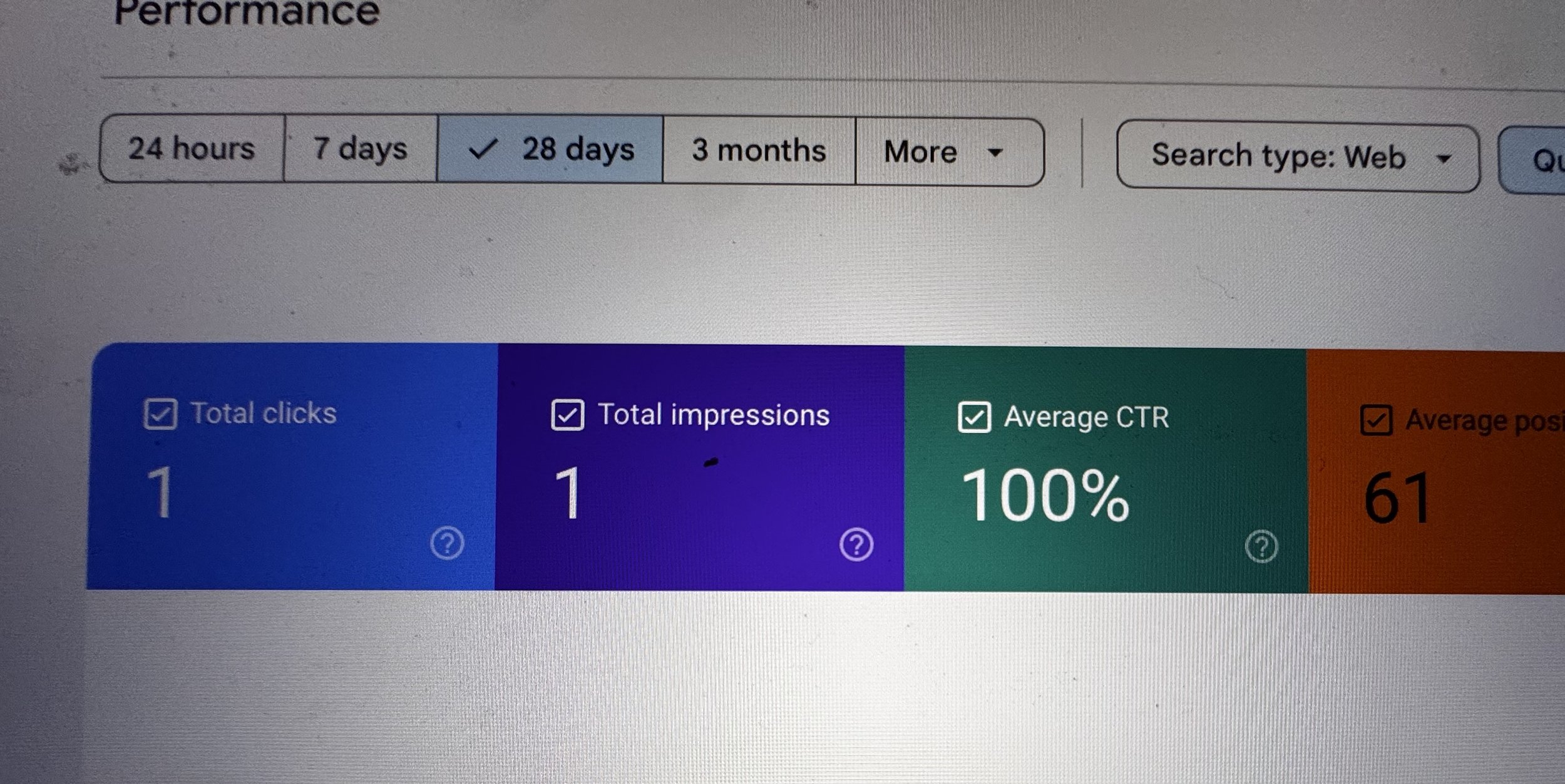
4 clicks. 150 impressions. Average position 16.4.
By every standard measure, a failure. I almost didn't look closely. But there was one query. The only one Google didn't hide. The only search specific enough, rare enough, to survive the privacy threshold and show itself to me.
I won't repeat it here. But I recognized it immediately, not as a keyword, but as a feeling. The kind of search you run when you already know what you're looking for doesn't exist. When you've tried the obvious searches and they've all returned the same results, the same aesthetic, the same version of a thing you never wanted in the first place.
This person was at position 61.
They had already scrolled past every result on every page before it. Past everything the industry had decided this should look like. Past the portfolios and the transformations and the confidence language. All of it, not what they were looking for.
And then they clicked something on my site that wasn't even a page. A contact form. A single dropdown option that had lived there quietly for months with no intention behind it. No copy. No images. Just a small signal that said: this might exist here.
They didn't submit the form. I never heard from them.
I kept thinking about that search. About what it feels like to go that deep and still not find what you're looking for. About how specific you have to be, how certain about what you don't want, before a search starts to look like that. It may as well not exist. That's what that search says. The thing I'm looking for may as well not exist.
So I built it.
Not for everyone. Not for page one. For the person who already knows. quietly, precisely, that what's out there isn't it. It lives somewhere on this site. It has no place in the navigation. It was made to be found only by someone paying close enough attention, or searching with enough specificity, or simply following something they can't quite name to wherever it leads.
This page is for you. I hope you feel seen.
Some projects don’t have galleries.